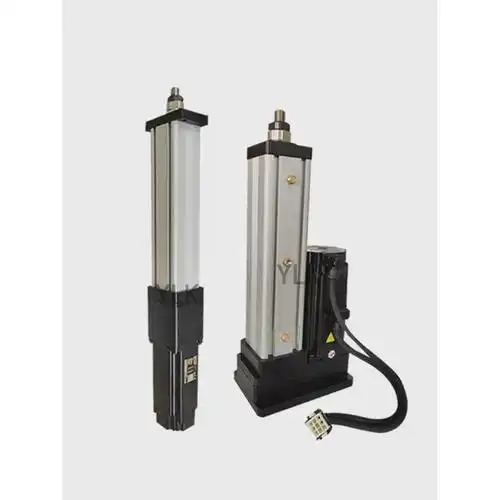
High-Thrust Heavy-Duty Servo Electric Cylinders in Concrete Machinery
News 2025-06-14
The application of high-thrust heavy-duty servo electric cylinders in the construction machinery field has not only improved construction efficiency, quality, and safety, but also promoted the industry’s shift toward intelligent and environmentally friendly development.
In concrete pouring operations, the performance of concrete pump trucks and placing booms directly affects pouring quality and efficiency. Traditional concrete pump truck booms often rely on hydraulic drives, which struggle to meet the requirements of complex structural construction when high precision is needed. The introduction of high-thrust heavy-duty servo electric cylinders has brought a breakthrough in pouring accuracy for concrete machinery.
Concrete pump truck booms driven by high-thrust heavy-duty servo electric cylinders can achieve more flexible and precise motion control. With the precise control of servo motors, the boom can move quickly and accurately in three-dimensional space, delivering concrete to the designated location. This advantage is particularly significant for constructions requiring extremely high pouring precision, such as thin-walled or curved structures.
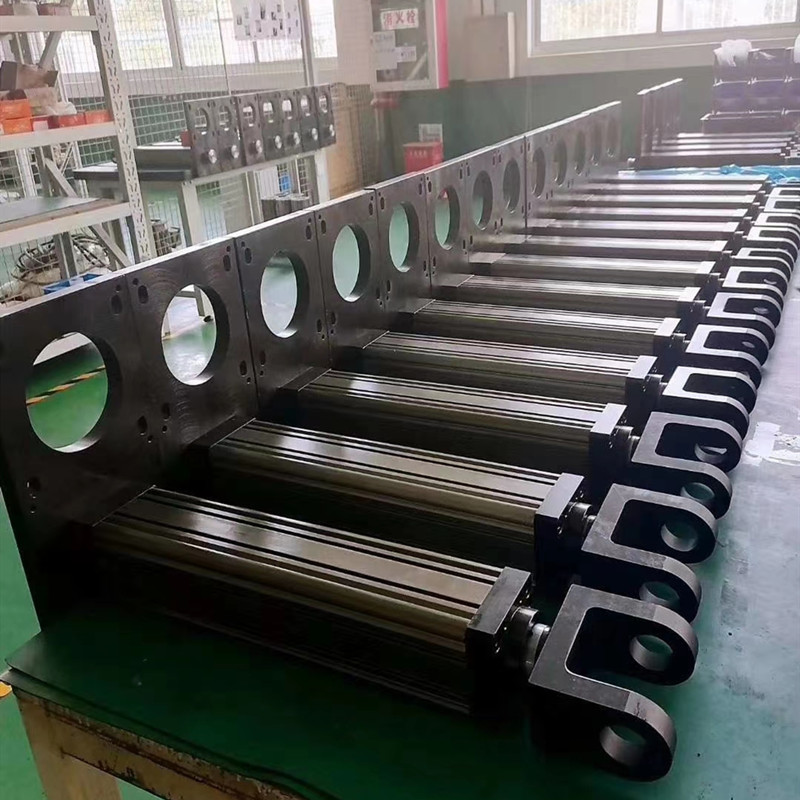
At the same time, the use of high-thrust heavy-duty servo electric cylinders also improves the energy efficiency of concrete pump trucks. These cylinders are electrically driven, providing high energy conversion efficiency and reducing losses associated with hydraulic transmission and conversion, aligning with the construction industry’s trend toward green construction.
With continuous advancements in motor control technology and material science, the performance of high-thrust heavy-duty servo electric cylinders will further improve, and costs are expected to decrease. Their application in construction machinery will become increasingly widespread.
In the future, high-thrust heavy-duty servo electric cylinders are expected to integrate deeply with technologies such as IoT, big data, and artificial intelligence, enabling remote monitoring, fault warning, and intelligent operation and maintenance of construction machinery, thus providing strong support for the digital transformation of the construction industry.